By Tyson Dirksen, Founder of Evolve Development Group
Indoor air quality (IAQ) is no longer optional — it is a core driver of occupant health, asset performance, and investor value. Studies show that indoor pollutants, especially from gas stoves, can account for up to a third of household nitrogen dioxide (NO₂) exposure (SFGate, 2025). For developers and investors, ignoring these hazards isn’t just a health concern — it’s a financial and reputational risk.
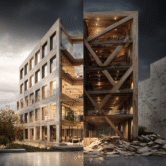
At Evolve Development Group, under my direction, we integrate advanced building science, mass timber construction, Passive House principles, and wellness-focused design into every project. The goal is simple: resilient, high-performance buildings that deliver measurable value for residents, investors, and communities alike.
For mixed-use buildings with condos over retail, units between 500–1200 sq ft provide the ideal scale for implementing these strategies — spacious enough to attract premium tenants and buyers, yet compact enough that ventilation, moisture, and indoor air quality must be carefully engineered.
1. Why Indoor Air Quality (IAQ) Matters
1.1 Hidden Pollutants are a Real Health Risk
Indoor air often contains higher concentrations of pollutants than outdoor environments. Gas stoves, off-gassing materials, and high-occupancy conditions contribute to NO₂, VOCs, particulate matter, and moisture accumulation (Brody et al., 2009; SFGate, 2025).
Our solution: All Evolve Development Group units use induction cooking, eliminating NO₂ at the source and removing one of the most significant indoor respiratory risks.
1.2 Occupant Health Drives Value
Poor indoor air quality has been linked to:
Respiratory illness and allergies
Cognitive performance decline
Sleep disruption and stress
Increased absenteeism and turnover
Buildings designed with IAQ in mind see higher tenant satisfaction, faster lease-up, and premium pricing, directly improving ROI.
2. Mass Timber: Structure Meets Wellness
2.1 Hygrothermal Regulation
Mass timber naturally buffers humidity swings (Built by Nature, 2025), preventing condensation and reducing mold risk, a common source of indoor illness.
2.2 Biophilic & Psychological Benefits
Exposed wood interiors reduce stress, improve mood, and enhance cognitive function (Hariadi & Carlisle, 2025). In units of 500–1200 sq ft, this translates into tangible occupant well-being and premium market appeal.
2.3 Low Emission Materials
Properly specified cross-laminated timber (CLT) and glulam panels emit negligible VOCs, supporting our health-first design strategy (Sterling Structural, 2025).
3. Dedicated Ventilation: The Cornerstone of Healthy Units
3.1 Why Dedicated Ventilation Matters
Combining ventilation, heating, and cooling in one system often leads to:
Poor airflow balance
Inadequate ventilation CFM per occupant
Risk of condensation and mold
Dedicated ventilation solves this:
Separate ducts allow proper sizing for both ventilation and heating/cooling airflow (CFM)
Optimizes fresh air delivery and temperature control simultaneously
Ensures predictable IAQ, independent of HVAC runtime
3.2 ERV + Dehumidifier Integration
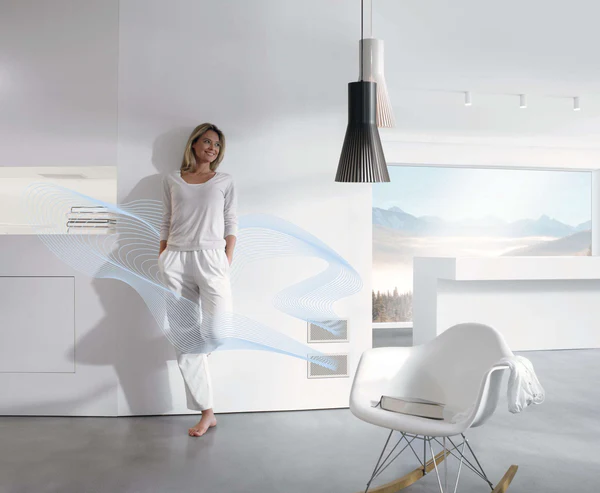
Evolve Development Group specifies Enthalpy Recovery Ventilation (ERV) paired with a whole-home dehumidifier to:
Exchange heat and humidity while delivering fresh air
Maintain 40–60% relative humidity
Prevent condensation and mold growth
This combination ensures perfectly balanced indoor air every day, a key differentiator in modern multi-family development.
4. Compact Unit Design with Premium Outcomes (500–1200 sq ft)
Even mid-sized units benefit from these strategies:
Air quality control ensures occupant comfort in higher-density living spaces
Mass timber aesthetics deliver premium finishes while supporting wellness
Efficient footprint maximizes per-square-foot value while maintaining spacious, healthy living
The result: units that feel luxurious, comfortable, and science-backed, attracting discerning tenants and buyers willing to pay a premium.
5. Investor Advantages of Health-First Design
High-performance, healthy buildings offer tangible returns:
Market differentiation: Mass timber + wellness + advanced ventilation = premium positioning
Faster lease-up and sale: Occupants prioritize healthy indoor environments
Lower operational risk: Reduced mold, IAQ complaints, and maintenance costs
Long-term asset value: Healthier, durable, and sustainable construction drives investor confidence
Strong branding & credibility: Projects by Tyson Dirksen and Evolve Development Group are known for healthy, high-performance real estate
6. Conclusion: Healthy Indoor Air Quality Is High Performance
Indoor air quality, humidity control, and material selection are primary determinants of asset performance and occupant well-being. By combining mass timber, ERV systems, dedicated ductwork, induction cooking, and dehumidification, developers can deliver buildings that:
Protect occupant health
Reduce long-term risk
Enhance comfort and marketability
Command premium pricing
At Evolve Development Group, we prove that building science, sustainability, and wellness aren’t just ideals — they are strategic tools for real estate success.
Healthy air. Healthy occupants. Higher value.
For more in-depth insights, see our full Evolve Development Group article here: Healthy Buildings, High Performance: Mass Timber Condos & Indoor Air Quality
Learn more about how Evolve Development Group and Tyson Dirksen build.
Read Calif. loves gas stoves. Stanford keeps flagging the health hazards.