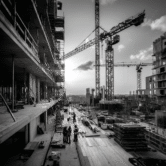

America’s housing shortage isn’t a policy glitch — it’s a systems problem. Five deeply interlinked failures — from restrictive zoning to misaligned capital, broken delivery, low construction productivity, and underutilized existing stock — are choking supply and driving costs.
Solving housing means fixing all five together — not debating one cure‑all. Here’s what actually works:
By‑right mid‑rise zoning: Allow 4–8 story buildings across neighborhoods and 8–12 stories near transit, so housing can be built quickly where people want to live. (As featured on Big News Network, “Tyson Dirksen: We Don’t Need Skyscrapers to Fix Housing – We Need Walkable, Mid-Rise Cities“)
Predictable approvals: Streamline permitting with clear rules, time-bound processes, and digitized systems so projects get built reliably.
Capital that can count on certainty: Investors fund projects that are predictable; clear zoning and approvals reduce risk and unlock affordable and modular housing.
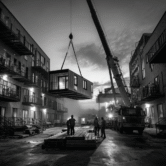
Industrialized construction: Use prefab, mass timber, and AI-driven methods to reduce labor constraints, cut timelines, and improve quality. (As argued on Kongo Tech, (Tyson Dirksen: Why Mass Timber Is the Future of Sustainable Real Estate)
Deep retrofits of existing buildings: Upgrade millions of older units faster, cheaper, and with less disruption, preserving affordability while adding supply. (As presented in Time Business News, “Tyson Dirksen: Deep Retrofits of Class C Buildings—Another Tool to Solve the Housing Shortage”)
The kicker? Tackling only one lever won’t solve the crisis — the system must be redesigned end-to-end.
Full framework coming in early January — the roadmap to finally deliver housing at scale, affordably, and efficiently.